Does the NDIS pay for house cleaning? Household tasks explained
When NDIS funding can pay for household tasks like cleaning, how to find it in a plan, and what the NDIS does not fund, such as products and exit cleans.
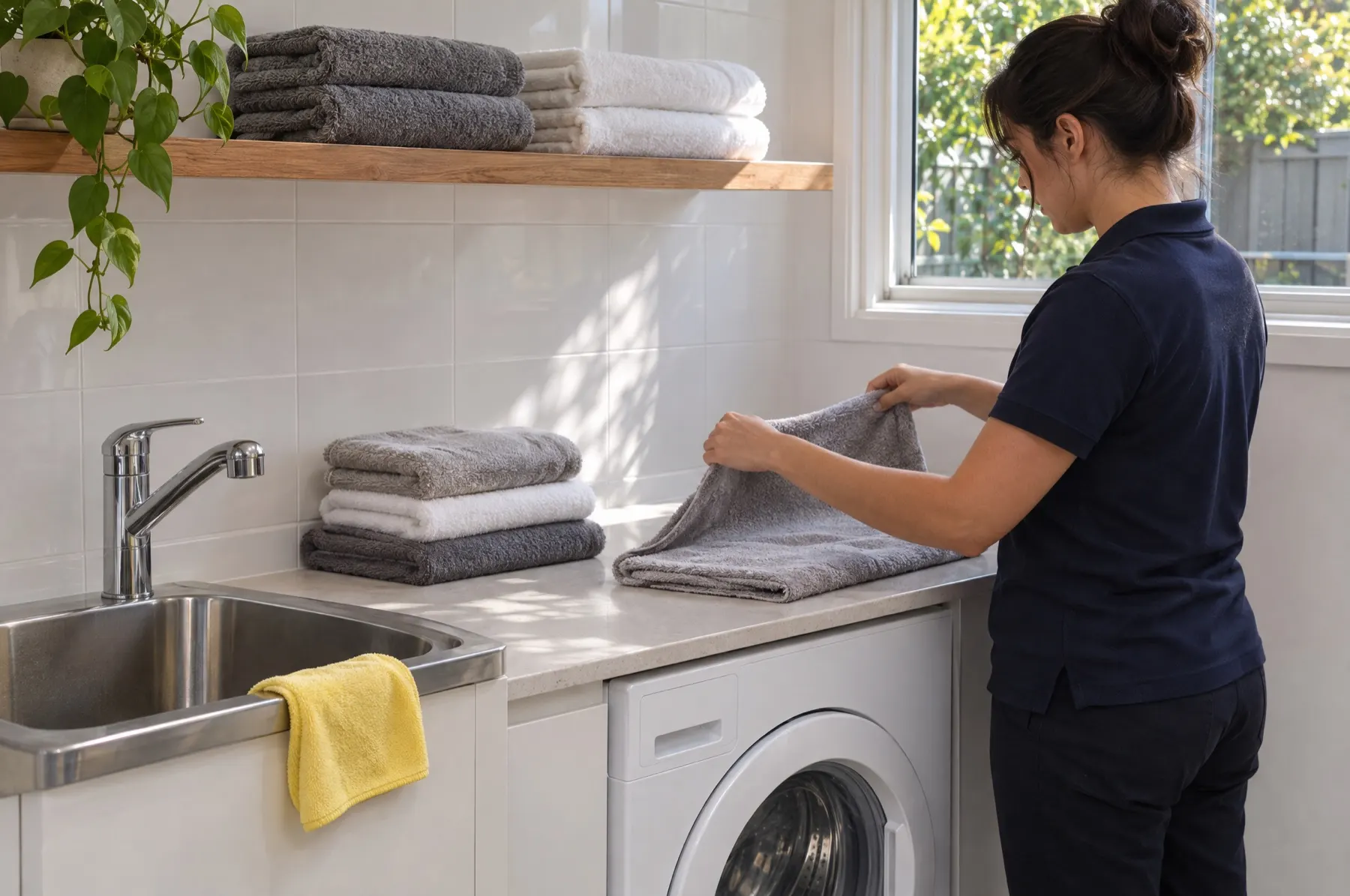
Yes, the NDIS can pay for house cleaning, but only when it is part of a participant’s plan. Like every NDIS support, it has to meet the “reasonable and necessary” criteria, and the plan is what decides. The NDIS does not pay for cleaning products, standard household equipment, or end-of-lease and bond cleans.
This guide explains how that works for participants, families and support coordinators. It was checked against official NDIS pages on 11 November 2026. NDIS rules are national, so they are the same in NSW and Victoria.
When the NDIS can fund cleaning
The NDIS says all supports must meet the reasonable and necessary criteria before it can fund them in a plan. Among other things, a reasonable and necessary support needs to:
- relate to your disability
- help you work towards your goals
- be value for money
- be likely to be effective and beneficial for you
- work alongside mainstream supports and the people around you.
It also says reasonable and necessary supports can’t include day-to-day living costs, and can’t be the same as supports already provided by family or other services.
Your NDIA planner looks at the information and evidence you give, and decides what can be funded. They also look at how much of a support you need and how often. That is why two people with similar homes can have very different cleaning funding, or none at all.
House cleaning has its own support item in the NDIS pricing schedule: House Cleaning and Other Household Activities, item 01_020_0120_1_1, charged by the hour.
How to tell if cleaning is in your plan
Plans are built from support budgets, support categories and support items. The NDIS uses the example of funding in the core supports budget, in the assistance with daily life category, being used for help with tasks around the home.
Some funding is flexible, which means you can choose which supports to buy within that budget. Some is stated, which means it can only be used for the support described. Your plan says which is which.
To find out whether cleaning can be claimed:
- Read your plan. Look at your core supports and whether the funding is flexible or stated.
- Ask your plan manager, if you have one. They pay invoices from your plan and can tell you where a cleaning invoice would be claimed.
- Ask your support coordinator, if you have one. They can help you find and arrange a cleaner.
- Ask your my NDIS contact, or call the NDIS on 1800 800 110, if you are unsure.
What the NDIS does not fund
The NDIS publishes a list of supports that are not NDIS supports. These cannot be funded, whatever is in your plan. For cleaning, the ones that matter are:
| Not funded | What the NDIS list says |
|---|---|
| Cleaning products | Groceries, “including all food, beverage, cleaning, household and health products” |
| Everyday equipment | “Standard household (including garden) items, appliances, tools and products” |
| End-of-lease and bond cleans | “Direct costs of compliance with a person’s tenancy agreement, including bond, pest control, exit cleaning, general damage repairs” |
| Home repairs | “Standard home repairs, home improvements, standard renovations and maintenance” |
So if you are moving out of a rental in Sydney or Melbourne, the exit clean is a private cost. The same applies to the vacuum, mop and products used in a regular clean: a cleaner may bring their own, but they should not appear on an NDIS invoice.
What a regular home clean usually covers
What a cleaner does on each visit is something you agree with them. The NDIS recommends a service agreement when you start with a new provider. A good service agreement covers what supports are provided, how they are provided, how much they cost and what to do if something goes wrong.
A regular home clean might include:
- kitchen benches, sink and cooktop
- bathroom and toilet
- vacuuming and mopping floors
- dusting and wiping surfaces
- emptying bins
- changing and making beds, if you want that.
Write down anything that matters to you: what not to move, products you prefer or cannot have, and who will be home. It is your home, and the list should fit how you live.
How to ask for cleaning at a plan meeting
If you need help with cleaning and it is not in your plan, you can raise it. The NDIS bases its decisions on the information and evidence you give, so preparation helps.
- Explain the link to your disability. Describe which household tasks you cannot do, or cannot do safely, and why.
- Connect it to your goals. For example, living independently or keeping energy for work, study or family.
- Bring evidence. Any reports or letters you have that describe how your disability affects household tasks.
- Be specific about how much. How many hours, and how often.
- Say what is already in place. Help from family or other services affects what the NDIS will fund.
The NDIS offers a plan implementation meeting when it approves a plan, and says you can ask for one at any time. It is a good chance to check how household tasks fit into the plan you already have.
For more about how Manora Cleaning approaches cleaning in people’s homes, see the disability home cleaning page. When you know what your plan allows, you can ask for a quote.
Questions people ask
Does every NDIS participant get funding for cleaning?
No. Plans are based on each person's needs and the information and evidence they give the NDIS. Cleaning is only funded where it is included in a plan as a reasonable and necessary support.
Can I use NDIS funding to buy cleaning products or a vacuum?
The NDIS lists groceries, including cleaning products, and standard household items, appliances, tools and products as things that are not NDIS supports. So products and everyday equipment are generally paid for privately.
Will the NDIS pay for an end-of-lease clean?
No. The NDIS lists the direct costs of complying with a tenancy agreement, including bond, pest control, exit cleaning and general damage repairs, as not NDIS supports.
How much will the NDIS pay for cleaning?
The national maximum price for House Cleaning and Other Household Activities is $60.10 an hour, rising to $64.59 from 1 December 2026. How many hours you can buy depends on the funding in your plan.