SDA and SIL cleaning: how to scope a shared disability home
A practical guide for house managers and SDA or SIL providers on writing a cleaning scope for a shared disability home that works for residents and staff.
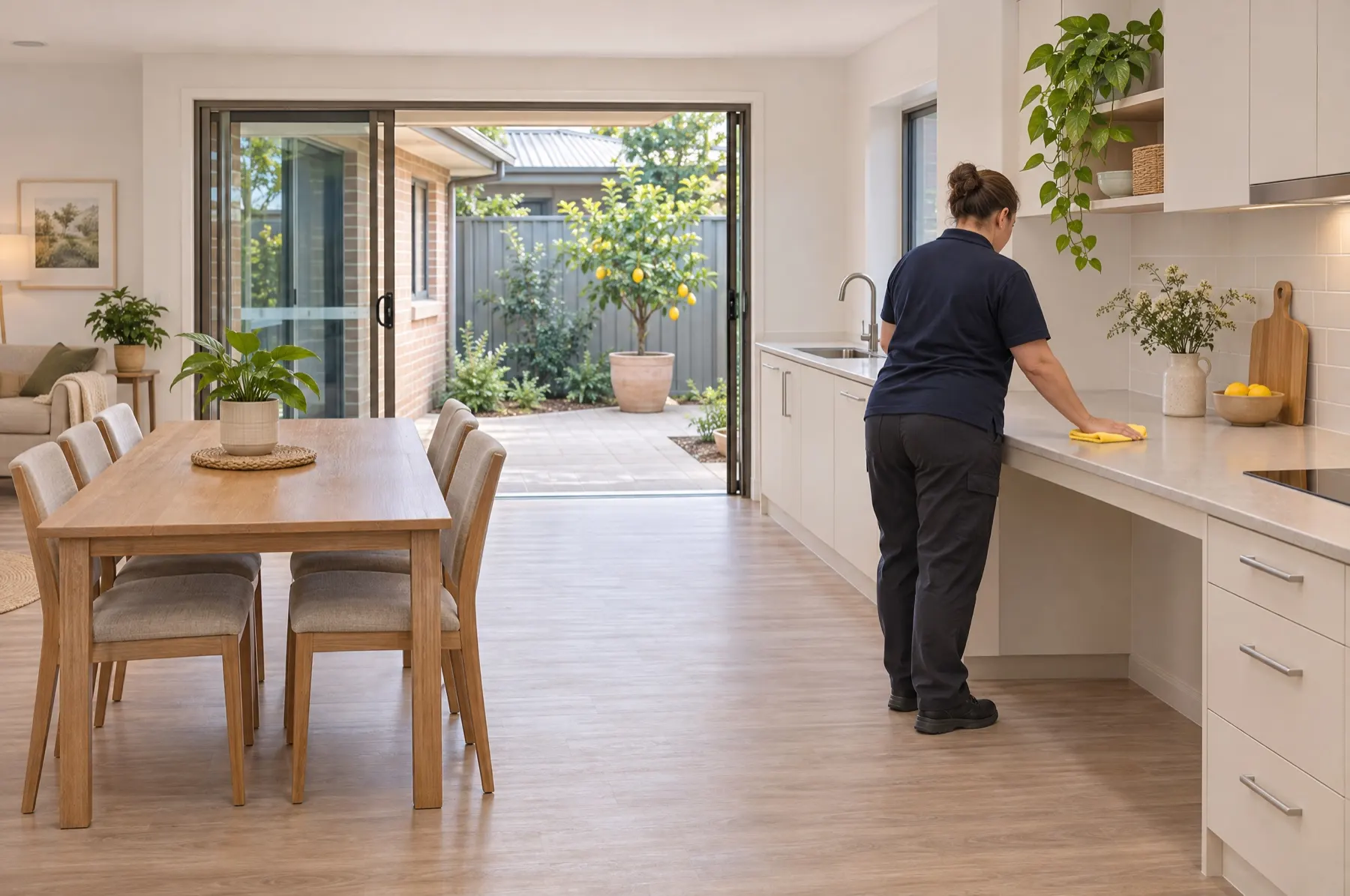
A good cleaning scope for a Specialist Disability Accommodation (SDA) or Supported Independent Living (SIL) home is written for that home, not copied from a standard house clean. It names the shared areas, the private rooms and who decides about each, the equipment a cleaner may and may not touch, the times that suit the people who live there, and what happens when a room becomes vacant. Get those on paper and most problems never start.
This guide is for house managers, SDA providers and SIL providers working out what to ask of a cleaning service, whether the home is in Sydney, Melbourne or anywhere else.
How a shared disability home differs from a private house
The NDIS describes SDA as housing designed with features that meet a person’s disability support needs, for example wide doorways, wheelchair-accessible kitchen sinks, ceiling hoists or button-operated doors. It says SDA is often a home shared with a small number of other people, where each person has their own private bedroom.
SIL is something else. The NDIS describes it as funding for support workers who help or supervise residents with day-to-day tasks in their home. It is clear that SDA is the housing itself and does not cover the supports from workers within it, and that some people have both in their plans.
For anyone writing a cleaning scope, that adds up to three practical differences:
- It is several people’s home at once. Shared rooms belong to everyone. Each bedroom belongs to one person.
- It is also a workplace. There may be a staff office, a room used for overnight assistance and a staff bathroom, all with their own needs.
- The building has features that need care. Hoist tracks, automated doors, step-free showers and accessible benches are cleaned differently from ordinary fittings, and some should not be touched at all.
Who decides what: shared areas, bedrooms and staff spaces
The clearest scopes split the home into zones and say who agrees the cleaning in each one.
| Area | Who agrees the scope | What to write down |
|---|---|---|
| Kitchen, dining, lounge and hallways | The provider, with residents’ input | Frequency, products, anything residents prefer left as it is |
| Shared bathrooms and laundry | The provider | Frequency, how drains and step-free floors are cleaned |
| Private bedrooms and ensuites | Each resident, or someone they choose | Whether the cleaner enters at all, what not to move, preferred times |
| Staff office and overnight room | The provider | Bedding, desks, what stays untouched (files, screens) |
| Outdoor and entry areas | The provider | Paths, bins, entry touch points |
One point is easy to miss. The NDIS lists household tasks like cleaning among the daily tasks SIL support workers can help with, and describes SIL as designed to help people live as independently as possible while building their skills. If a resident likes wiping down their own bench or making their own bed with a support worker, a contracted clean should not quietly take that over. Ask the SIL provider to confirm in writing where the contracted clean stops.
Working around residents, support workers and shift changes
A clean that suits the roster but not the residents is not a good clean. Before the first visit, ask the house manager for:
- The daily rhythm. Mealtimes, quiet times, when residents are usually out, and when they tend to be home.
- Shift handover times. Avoid them. Staff are busy, hallways are full and the cleaner becomes one more thing to manage.
- Sensory needs. Some residents may find vacuum noise, strong scents or a stranger in the hallway hard. Agree on unscented products, quieter tasks at certain times, or rooms done while a resident is out.
- Access and sign-in. How the cleaner gets in, who on shift is their contact, and how they sign in and out.
- Introductions. How each resident would like to meet a new person, if at all, and whether the same cleaner can come each time.
- Reporting. How the cleaner passes on anything they notice, such as damage, a hazard or something that worries them. The answer should be a named person at the provider, not a conversation with residents or a note left on the bench.
Equipment and assistive technology: what a cleaner touches and what they do not
Most disputes in shared homes start with equipment. The fix is a list. Walk through the home and mark every item in one of three columns.
Usually cleaned as routine
- Grab rails, door handles, light switches and other touch points
- Button-operated door panels, wiped only, not pressed repeatedly
- Step-free shower floors and drains
- Accessible benches and sinks
- Door and sliding tracks, kept clear
Cleaned only as the provider or resident directs
- Wheelchairs, shower chairs and commodes
- Hoist handles and controls
- Beds with electric controls
- Communication devices and home automation panels
Not touched by the cleaner
- Medication, medical devices and anything clinical
- Hoist slings, motors and tracks overhead, unless the provider sets out otherwise
- Chargers and cables, which are never unplugged or moved
- Residents’ personal belongings, unless the resident asks
Keep the list with the scope and update it whenever equipment changes.
Vacancy and handover cleans
When a resident moves out, and before someone new moves in, the room needs more than the usual visit. Treat it as a separate job with its own checklist:
- Bedroom and any ensuite cleaned top to bottom, including skirting boards, doors and light switches
- Inside wardrobes, drawers and cupboards wiped out
- Inside windows and tracks cleaned
- Floors deep cleaned
- A short written note of anything that needs repair or replacing, sent to the provider
- Nothing belonging to the departing resident moved, packed or thrown out without clear written instruction
Book it with enough notice to fit around any maintenance, and agree who checks the room before the new resident arrives.
One scope, one invoice, one contact per home
Shared homes run better when the paperwork is simple:
- One written scope per home, reviewed when a resident moves in or out, or when equipment changes.
- One invoice per home, so costs can be matched to the right property without unpicking a combined bill.
- One named contact on each side, so changes, complaints and access questions go to someone who can act on them.
When you compare cleaning services, ask each one the same questions: how they handle private bedrooms, whether the same people will come each time, what worker screening their cleaners hold and whether you can see it, whether they can show a current insurance certificate, how they report an issue, and how they record a vacancy clean. The answers will tell you more than any brochure.
You can read more about how we approach disability home cleaning. If you have a home that needs a scope, you can ask about cleaning for an SDA or SIL home and tell us a little about it.
Questions people ask
Who should sign off a cleaning scope for an SDA or SIL home?
The provider responsible for the home usually agrees the scope for shared areas and staff spaces. Each resident, or someone they choose, should agree what happens in their own bedroom. Write both down so a new cleaner or a new house manager can follow them.
Do support workers or a cleaner do the cleaning?
It can be both. The NDIS lists household tasks like cleaning among the daily tasks SIL support workers can help with, so agree in writing where a contracted clean stops and where residents keep doing tasks with their support workers.
Should a cleaner touch hoists, wheelchairs or shower chairs?
Only as the provider and the resident direct. The safest scope names each item and says whether it is cleaned, cleaned only on instruction, or left alone, and who to ask when unsure.
What should a vacancy clean include?
At least the bedroom and any ensuite from top to bottom, inside wardrobes and drawers, windows and tracks, and a written note of anything that needs repair. Belongings should only be moved on clear written instruction.