Who cleans up crime scenes and unattended deaths in Australia?
Police do not usually clean up after a crime or an unattended death. Here is who does in NSW, what happens before cleaning starts and what to ask.
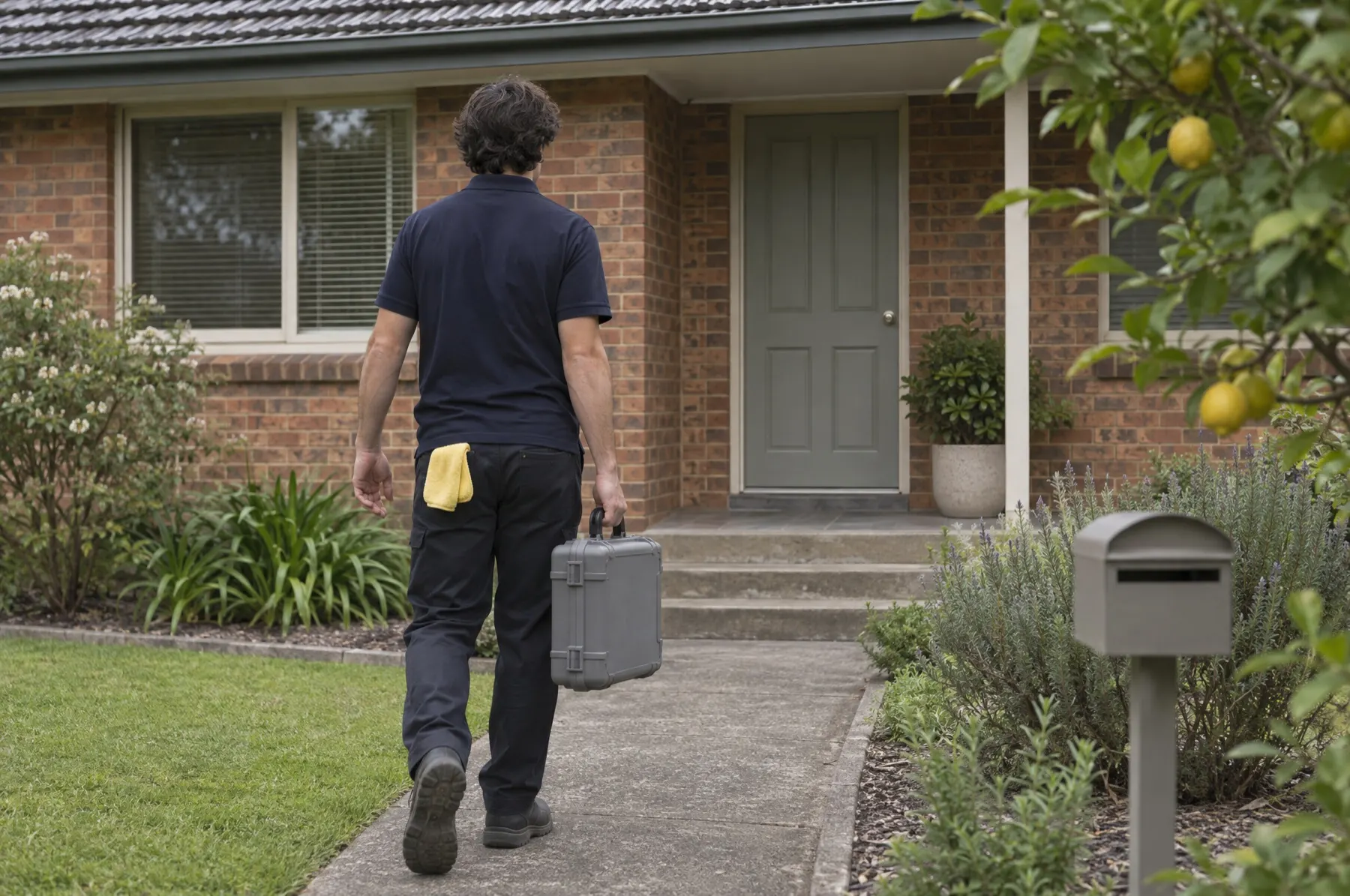
Police do not usually clean up after a crime or an unattended death. In New South Wales, the job of arranging the clean belongs to the owner, occupier or relatives, and most people engage a company that specialises in this work. The one exception in NSW is residue from chemicals that police use to find evidence, which police are responsible for.
Many people only learn this once they are standing outside a property wondering what happens next. This guide explains who does what, in what order, and what to ask before anyone starts.
Police do not usually do the cleaning
It is a common assumption that someone official will come back and put things right. The NSW Police Force is clear that this is not its role.
After a fingerprint examination, there is often powder left behind. The NSW Police Force says it “is not responsible for the cleaning of this residue”, although it can tell you how to remove it, and an examiner may give you a card with instructions.
For scenes affected by blood or other bodily fluids, it says: “It is the responsibility of the user/owner/relatives/ occupiers of the premises and/or vehicles to clean up biologically contaminated crime scenes such as suicides, deceased persons, shootings and decomposed bodies where no chemical enhancement techniques have been used by NSW Police Force officers.”
The exception: chemical residue
Police sometimes use chemicals to find or enhance trace biological evidence. The NSW Police Force says cleaning those residues “is the responsibility of the NSW Police Force, Crime Scene Service Branch (CSSB)”, and that the work is usually sourced from private contractors who must closely follow work health and safety guidelines. The NSW Government adds that police will tell you if they are arranging and paying for the cleaning.
The pages above describe NSW. We did not find an equivalent official Victorian page, so if the property is in Victoria, ask the officer in charge of the investigation who is responsible in your situation.
What happens before cleaning can start
Nothing should be cleaned or moved while police are still working at a scene. Cleaning starts once police have finished and the property has been released. If you are not sure whether that has happened, or who is responsible for the cleaning, ask the officer in charge. The NSW Police Force says that where there is doubt, that officer can contact the CSSB Referral Officer.
In the meantime, a few practical steps help:
- Keep the property closed and secure, and keep children and pets away.
- Do not start cleaning yourself. The NSW Government says property owners and family members “should avoid attempting to clean the crime scene because of health and safety issues.”
- If there is a landlord, managing agent or strata manager, let them know.
- If there is an insurance policy on the property, call the insurer before work starts.
- Keep any cards, reference numbers or contact details police give you.
Our guide on who pays for crime scene cleaning covers insurance and the NSW Victims Support Scheme in more detail.
What a forensic cleaner does that an ordinary cleaner does not
A regular cleaner removes everyday dirt from surfaces that are basically sound. Forensic or trauma cleaning starts from a different question: what has been affected, and what needs to be removed rather than cleaned.
In general, the work involves:
- Assessing the property to see which rooms, surfaces and items are affected, including what cannot be seen at first glance.
- Protecting the people doing the work, with protective equipment suited to biological hazards.
- Removing affected materials such as soft furnishings, carpet or underlay that cannot be safely cleaned.
- Cleaning and disinfecting hard surfaces, and treating odour where needed.
- Disposing of waste properly. In NSW, the EPA treats clinical and related waste as a “special waste” with specific rules for transport and disposal. Whether a particular item falls into that category is a technical question, so ask how the company classifies and disposes of what it removes.
- Documenting the work, so the owner, an insurer or a scheme can see what was done.
The NSW Government recommends seeking help from “qualified companies that specialise in crime scene cleaning”. It does not define what qualified means, so the questions below are a sensible way to check.
How families usually find someone
The NSW Government suggests three ways: ask the police officer in charge of the investigation for recommendations, search online for “forensic cleaning”, or ask family members or support workers about reputable businesses. Funeral directors, insurers and property managers are often asked too.
Whoever you contact, it is reasonable to ask:
- Do you hold public liability insurance, and can I see a certificate of currency?
- What training do the people doing the work have for biological hazards?
- How will affected materials be removed, transported and disposed of, and by whom?
- Will you give me a written scope and itemised quote before starting?
- Will you provide a written record of the work when it is finished?
- Who will be my contact, and how will you get access to the property?
- How will you keep the work discreet for neighbours?
A good company will answer these plainly and in writing.
What it involves on the day
Most families do not need to be there, and many prefer not to be. Usually one person arranges access, agrees the scope and signs off on the quote. The cleaning team then works through the agreed areas, removes what was listed, cleans and disinfects, and secures the property again when they leave. Afterwards you should receive a written record of what was done, which is useful for an insurer, a managing agent or a Victims Support claim.
The NSW Government says crime scene cleaners must meet the minimum standard of service required of all NSW businesses. If something goes wrong, you can lodge a complaint with NSW Fair Trading on 13 32 20.
You can read how we approach this work on our forensic and trauma cleaning page. If you would like to talk it through, or need a written scope and quote for a property in Sydney or Melbourne, you can request a call back.
Questions people ask
Do police clean up crime scenes?
In NSW, generally not. The NSW Police Force says it is not responsible for cleaning fingerprint powder, and that biologically contaminated scenes are the responsibility of the owner, occupier or relatives. The exception is residue from chemicals police used to enhance evidence, which the NSW Police Crime Scene Service Branch is responsible for.
Who cleans up after someone dies at home?
In NSW, cleaning after a death at home is the responsibility of the owner, occupier or relatives, unless police used chemical enhancement at the scene. Often an ordinary clean is enough. Where a person was not found for some time, or there are bodily fluids, a specialist company is usually the safer choice.
How do families usually find a forensic cleaner?
The NSW Government suggests asking the police officer in charge of the investigation for recommendations, searching online for forensic cleaning, or asking family members or support workers about reputable businesses.
What can I do if I am unhappy with the cleaning?
The NSW Government says crime scene cleaners must meet the minimum standard of service that applies to all NSW businesses. If you are dissatisfied, you can lodge a complaint with NSW Fair Trading on 13 32 20.