What does a house cleaner do in 2 hours? Preparing for a first visit
How to prepare for your first visit from a house cleaner, what fits in a two-hour clean and what does not, and the questions to ask before the day.
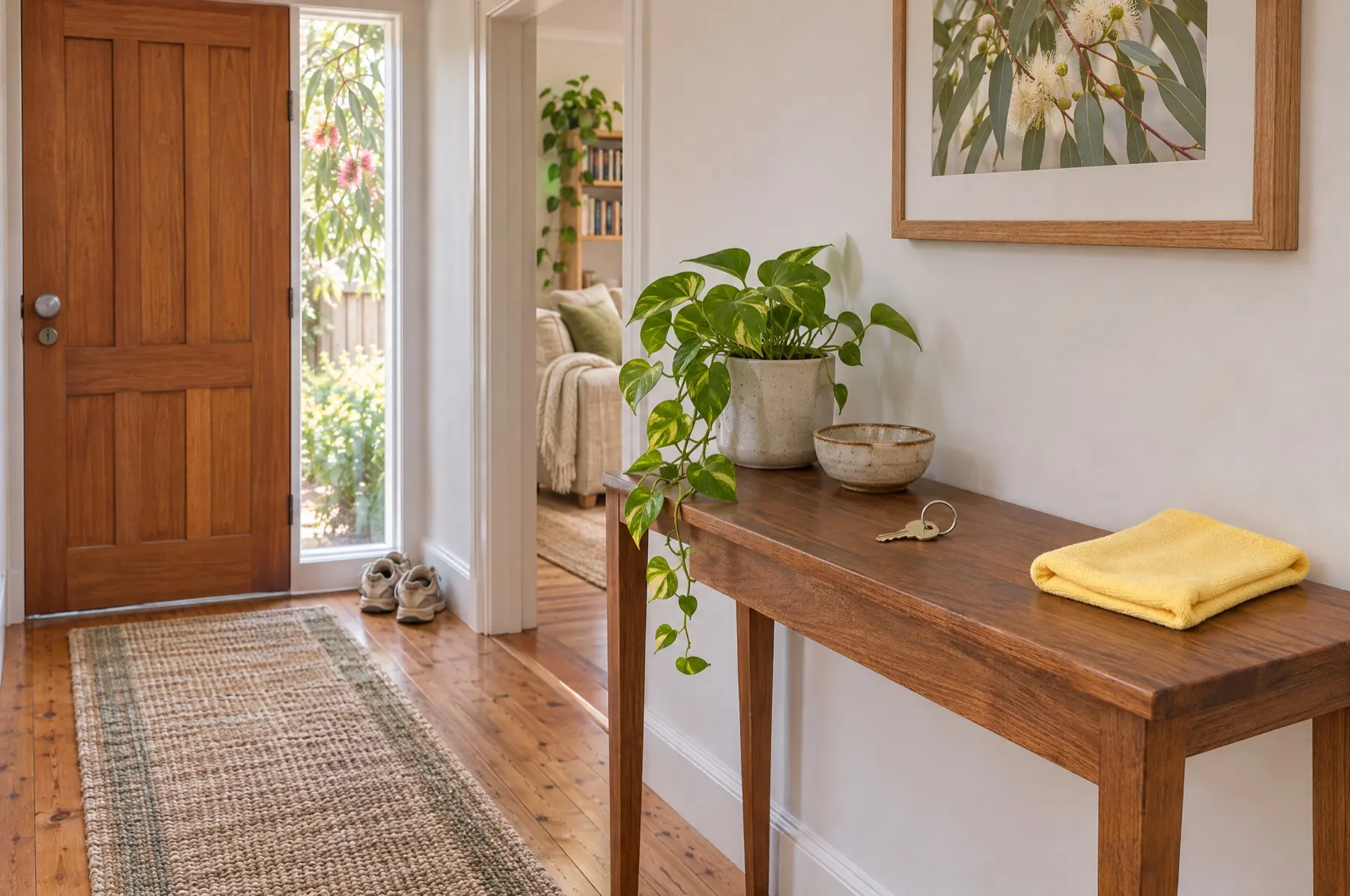
In two hours, a house cleaner can usually do a regular clean of the main rooms in a small to mid-sized home that is kept reasonably tidy: kitchen, bathroom, floors, dusting and bins. A larger home, a home that has not been cleaned in a while, or a long list of extras will not fit. A little preparation before the first visit makes a real difference to how much gets done.
What fits in two hours, and what does not
Time is the biggest limit on any visit. As a rough guide, here is what a regular two-hour clean tends to cover, and what usually needs more time or its own booking.
| Usually fits in a regular visit | Usually needs more time or a deep clean |
|---|---|
| Kitchen benches, sink and cooktop | Inside the oven and rangehood filters |
| Bathroom and toilet cleaned | Shower screens and grout scrubbed back |
| Floors vacuumed and mopped | Inside the fridge |
| Dusting of reachable surfaces | Skirting boards, doors and light switches |
| Mirrors and glass spot cleaned | Inside windows and tracks |
| Bins emptied | Cupboards and wardrobes wiped out |
How much fits depends on the size of the home, how many bathrooms there are, the type of floors, pets, and how much tidying the cleaner has to do before they can clean. Our residential cleaning page sets out how a regular clean, a deep clean and by-request jobs typically differ.
If your home needs a lot of catching up, a first deep clean and then shorter regular visits is often better value than trying to do everything in two hours, every time.
Before the day: what to sort out
Most first-visit problems come from things nobody asked about. Agree these before the day.
Keys and access
Will you be home, or will the cleaner let themselves in? If you are leaving a key or lockbox code, agree where it is and how it is returned. Mention gates, intercoms, parking and building access for apartments.
Pets
Tell the cleaner what pets you have and how they behave with visitors. Decide whether pets will be shut in a room, taken out, or left to roam. Mention any doors that must stay closed.
Alarms
If you have an alarm, decide whether you will turn it off before the visit or give the cleaner a code. Explain how to reset it when they leave.
Products and equipment
Ask what the cleaner brings and what you need to supply. Mention any allergies, sensitivities or surfaces that need particular care, such as natural stone, timber or delicate finishes, and any products you would rather they used or avoided.
Your list
Write a short list of what you want done, in order of priority. If time runs out, the top of the list gets done first.
The morning of the first visit
A few minutes of preparation means more of the time goes on cleaning.
- Clear benches, tables and floors. Put away dishes, toys, clothes and paperwork. The cleaner can clean around things, but moving them takes time.
- Put away valuables and anything fragile you would rather not have handled.
- Mark rooms or items to leave alone, such as a study, a child’s room or a display cabinet.
- Leave out anything the cleaner needs, such as a vacuum or products if you are supplying them.
- Make sure there is water and power, and somewhere to empty a mop bucket.
You do not need to clean before the cleaner arrives. That is their job.
Do you need to be home?
It is your choice. Being home for the first visit lets you walk the cleaner through the house, point out priorities and answer questions. Many people then leave for later visits, once access is agreed and they are comfortable. If you stay, it helps to keep out of the room being cleaned so the cleaner can work through the house in order.
After the first clean: giving useful feedback
The first visit is where a cleaner learns your home. Feedback straight after is how the second visit gets better.
- Walk through soon after. Look at the places that matter most to you.
- Be specific. “The shower screen still has marks” is easier to act on than “the bathroom wasn’t great”.
- Say what was good, too. It tells the cleaner what to keep doing.
- Adjust the list. If something did not fit, decide whether to drop it, rotate it between visits or add time.
- Ask about timing. If two hours was not enough, ask what more time or a different frequency would cover.
Keep your list somewhere both of you can see it, so every visit covers the same ground.
Questions to ask before you book
- How long do you expect my home to take, and is there a minimum booking length?
- What is included in a regular visit, and what is extra?
- Do you bring products and equipment, or do I supply them?
- How do keys and access work if I am not home?
- Will it be the same cleaner each time?
- What happens if something is missed, or if I need to change a visit?
If you would like a written quote with your list attached, you can request one here.
Questions people ask
Do I need to be home when the cleaner comes?
Not necessarily. Many people are home for the first visit to show the cleaner around, then leave a key or lockbox code for later visits. Agree how access works before the day.
Do house cleaners bring their own supplies?
Some do and some do not. Ask before your first visit what the cleaner brings, what you need to supply, and whether you can ask for particular products for allergies or delicate surfaces.
Should I tidy before the cleaner arrives?
A quick tidy helps. Clearing clutter off benches, tables and floors means the cleaner spends the time cleaning surfaces rather than moving your things. You do not need to clean before they come.
What if two hours is not enough?
Tell the cleaner what matters most, so that gets done first. After the first visit, ask whether your home needs more time, a different frequency, or a one-off deep clean to get it to a standard that two hours can then maintain.